
Published Umar Rana 16 min read
Leadership & Effectiveness
An Opinionated Guide to Vision, Mission, Values and Culture
Most companies treat Vision, Mission, Values, and Culture like furniture: pretty to look at, useful for decoration, but rarely load-bearing. They go on the wall in reception, get printed in the employee handbook, and are dutifully recited at the all-hands. Then they are quietly ignored the moment a hard decision needs to be made.
After 26 years building technology businesses (from leading large teams at Telenor to founding and scaling Alchemative, where we served 800+ clients across 15 countries) I have come to believe the opposite. Vision, Mission, Values, and Culture are the load-bearing walls of any organisation that intends to last. Get them right and almost everything else gets easier. Get them wrong and no amount of strategy, capital, or talent will save you.
This is an opinionated guide. It is not academic. It is not balanced. It is what I would tell you over coffee if you were about to start, scale, or rescue a company.
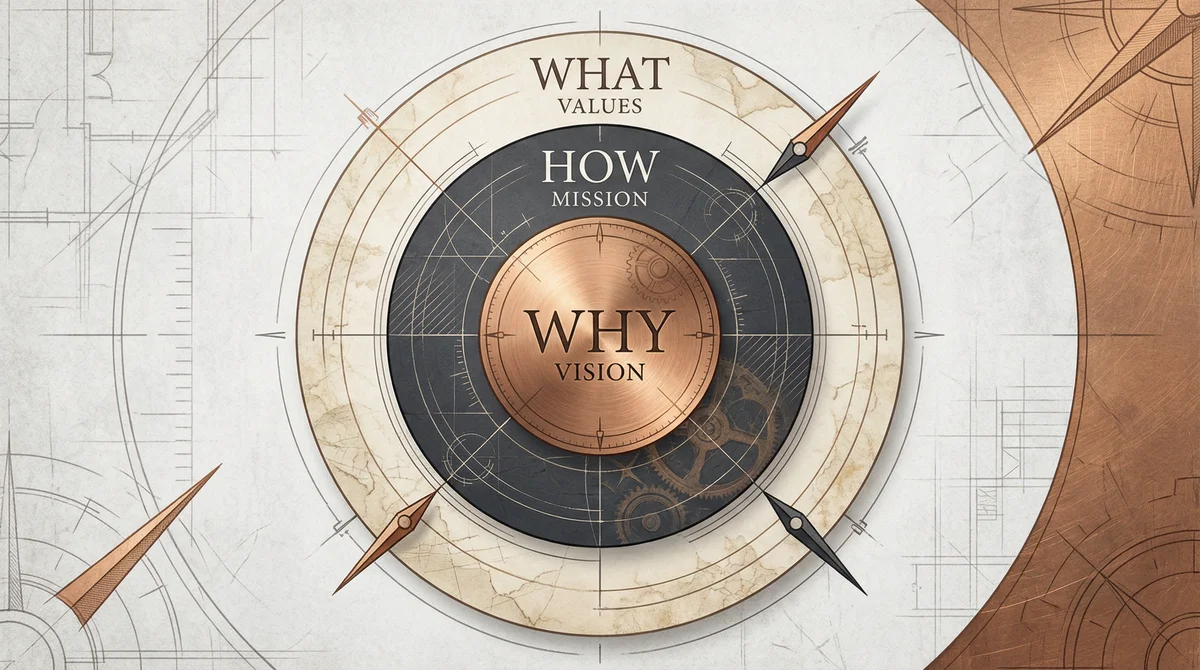
Figure 1: The four load-bearing walls: Vision, Mission, Values, and Culture.
Part 1: Vision: The Destination
Vision is not a slogan. A vision is the picture of the world you are trying to bring into existence. It is long-range, almost impractical in its ambition, and emotionally resonant for the people who choose to chase it with you.
A real Vision should make a rational adult slightly uncomfortable.
If your Vision is comfortable, it is probably a strategy in disguise. Strategy is how you win this year. Vision is what you would still be doing if winning this year were guaranteed.
Testing your Vision against the hard questions
Before you commit a Vision to your team, run it through these:
- Would I still pursue this if no one ever recognised me for it? If the answer is no, the Vision is about you, not the work.
- Could I describe it to a curious 10-year-old? If you cannot, it is not yet clear enough.
- Does it survive 10 years of market change? Vision describes the destination, not the route.
- Does it pull people towards it, or push them? Great Visions create voluntary effort.
Simon Sinek’s Start with Why [1] makes the case that purpose is what people buy into long before product, and the lived experience of building Alchemative confirmed that for me again and again. The most committed teammates I ever had were the ones who connected emotionally to where we were going, not to what we were doing on a Tuesday afternoon.
Part 2: Mission: The Roadmap
If Vision is the destination, Mission is the route. The Mission tells you what you do, for whom, and how. It is the bridge between the impractical ambition of the Vision and the daily decisions of the business.
A good Mission statement answers three questions:
- What do we do? (The activity)
- Who do we do it for? (The audience)
- How do we do it differently? (The edge)
Most Mission statements fail by trying to say too much. They become committee-written paragraphs that nobody can recall under pressure. The best Missions I have seen are short enough to fit on a sticky note and specific enough to rule things out.
Table 1: Vision vs. Mission: Different Jobs
| Dimension | Vision | Mission |
|---|---|---|
| Time horizon | 10 to 25 years | 3 to 5 years |
| Tone | Aspirational, emotional | Practical, directional |
| Tests | Does it inspire? | Does it focus? |
| Changes | Rarely | As the market evolves |
Mission as a filter
The most underrated function of a Mission is that it tells you what not to do. At Alchemative, the Mission was clear about who we served: high-growth retail brands building serious e-commerce operations. That clarity meant we politely declined dozens of well-paying projects every year that fell outside it. Saying no to the wrong work is how you create capacity for the right work.
If your Mission does not regularly cause you to walk away from revenue, it is not doing its job.
Part 3: Values: The Algorithms
Here is where most companies go wrong. They treat values as adjectives (Excellence, Integrity, Innovation) and then act surprised when nobody knows how to apply them.
Values are not adjectives. They are algorithms.
A value that you cannot translate into a behaviour is decoration. A real value sounds like an IF / THEN rule that anyone in the company, at any level, can apply on any given day.
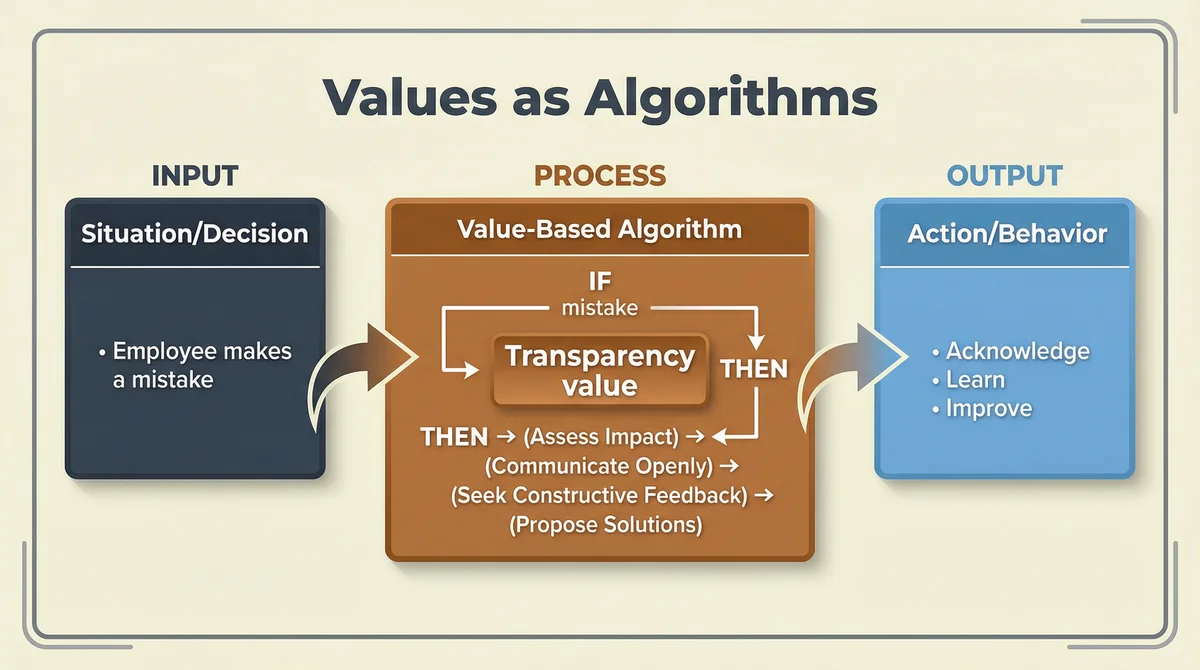
Figure 2: From abstract value to executable algorithm.
The algorithmic approach
Take “Transparency.” On its own it is meaningless. Translate it:
- IF you make a mistake, THEN you raise it in the next stand-up before anyone else discovers it.
- IF you are running behind on a commitment, THEN you tell the stakeholder before the deadline, not after.
- IF a peer asks you for honest feedback, THEN you give it kindly and specifically, not generically.
Now Transparency is something a new joiner can practise on their first day. It is no longer a poster: it is an operating system.
This wasn’t theoretical. We had real situations where we had to apply this value. One notable example was when we were offered a large government contract that would have significantly boosted our revenue. However, the terms included under-the-table payments and a lack of transparency in the procurement process. Applying our Transparency value, the decision was clear: we walked away. It was painful in the short term, but it reinforced our values and built trust with our team and other clients.
Table 2: Alchemative’s Values Evolution (2014 to 2023)
| Year | Values | Key Change | Reason for Evolution |
|---|---|---|---|
| 2014 | Transparency, Agility, Excellence | Initial values established | Founding principles based on early team culture |
| 2015 to 2022 | Transparency, Agility, Excellence | No changes | Values remained stable during growth phase |
| 2023 | Transparency, Adaptability, Excellence, Discipline, Accountability | Added 2 new values, refined Agility to Adaptability | BHAG session revealed need for more structure as company scaled; remote teams required clearer accountability frameworks |
The Telenor Lesson: “Be Respectful”
During my time at Telenor, I witnessed the power of a single, well-defined value: “Be Respectful.” This wasn’t just about politeness. It was about creating an environment where:
- Inclusivity was the default, not an initiative
- Equality was practised, not just preached
- Transparency in communication was expected at all levels
- Diligence in understanding different perspectives was valued
- Dialogue was encouraged, even when it was difficult
I saw this value in action across different countries and cultures within Telenor’s global operations. It created a foundation of psychological safety that allowed teams to take risks, innovate, and challenge the status quo without fear of retribution. This single value, properly defined and consistently reinforced, had a multiplier effect on everything else the company did.
The Scaling Challenge: Remote Teams and Values
One of the biggest challenges we faced at Alchemative was maintaining our values as we scaled, particularly with remote teams spread across different time zones and cultures. What “Transparency” meant in our Lahore office wasn’t always interpreted the same way by our team in Dubai or our contractors in Eastern Europe.
This is where the algorithmic approach to values became critical. Instead of assuming everyone understood what we meant by “Transparency,” we had to be explicit:
- IF you’re working remotely and encounter a blocker, THEN you post it in the team channel within 2 hours, tag the relevant people, and propose at least one potential solution.
- IF you’re in a different time zone and miss a meeting, THEN you watch the recording within 24 hours and post your questions or feedback in the shared document.
These weren’t micromanagement rules; they were clarity. They removed ambiguity and ensured that our values could scale across geographies and cultures.
Part 4: Culture: The Emergent Property
If Vision is the destination, Mission is the roadmap, and Values are the algorithms, then Culture is the emergent property: the sum total of all the behaviours, decisions, and interactions that happen when your people apply your values every day.
Culture is what happens when no one is watching.
You cannot “create” a culture through posters, team-building exercises, or pizza Fridays. Culture emerges from the lived experience of your values. It’s the result of thousands of small decisions, made by every person in your organisation, guided by the algorithms you’ve defined.
The Three Pillars of a Thriving Culture
Based on my experience and the research of organisational psychologists like Amy Edmondson, I believe a thriving culture rests on three pillars:
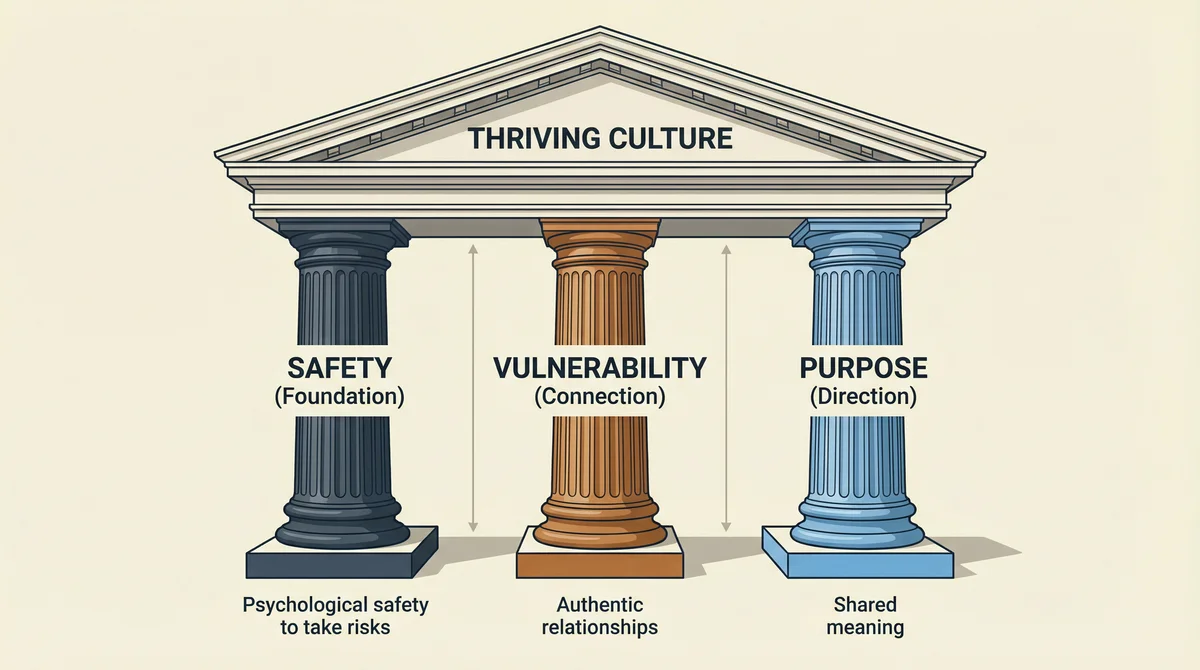
Figure 3: The Three Pillars of Thriving Culture: Safety, Vulnerability, and Purpose.
- Safety (The Foundation): People must feel psychologically safe to take risks, admit mistakes, and challenge ideas without fear of punishment or humiliation [4].
- Vulnerability (The Connection): Leaders must model vulnerability by admitting when they don’t have all the answers, asking for help, and showing their humanity. This creates authentic relationships and trust.
- Purpose (The Direction): Everyone must understand how their work connects to the larger Vision. When people see the impact of their contributions, they are intrinsically motivated to do their best work.
Without these three pillars, you don’t have a culture; you have a collection of people working in the same building (or Zoom room).
Culture as a Competitive Advantage
In the age of AI, automation, and global competition, culture is becoming the ultimate differentiator. Your competitors can copy your products, your pricing, and your marketing. They cannot copy your culture.
A strong culture:
- Attracts top talent: People want to work for companies where they feel valued and aligned with the mission.
- Retains employees: High turnover is expensive and disruptive. A strong culture reduces attrition.
- Drives innovation: When people feel safe to experiment and fail, they take the risks necessary for breakthrough innovation.
- Enhances customer experience: Happy, engaged employees create better experiences for customers.
This isn’t soft, touchy-feely stuff. This is hard-nosed business strategy. Companies with strong cultures consistently outperform their peers [5].
Measuring Culture: Beyond the Annual Survey
Most companies measure culture through an annual employee engagement survey. This is better than nothing, but it’s woefully inadequate. Culture is dynamic; it changes based on leadership decisions, market conditions, and team composition. You need real-time feedback, not an annual snapshot.
Here are some alternative approaches:
- Pulse Surveys: Short, frequent surveys (weekly or bi-weekly) that track specific cultural indicators like psychological safety, alignment with values, and clarity of purpose.
- Behavioural Metrics: Track behaviours that reflect your values. For example, if “Transparency” is a value, measure how quickly issues are escalated, how often feedback is shared, and how many decisions are made with input from diverse stakeholders.
- Exit Interviews: When people leave, they often tell you the truth about your culture. Don’t just conduct exit interviews; analyse them for patterns and take action.
- Stay Interviews: Don’t wait until people leave. Regularly ask your best employees why they stay and what would make them consider leaving.
Table 3: Culture Measurement Framework
| Metric Type | What to Measure | Frequency | Action Threshold |
|---|---|---|---|
| Leading Indicators | Psychological safety score, Values alignment score, Purpose clarity score | Weekly pulse | Below 70% positive responses |
| Lagging Indicators | Employee retention rate, Internal promotion rate, Employee referral rate | Quarterly | Below 85% retention, below 30% promotions from within |
| Behavioural Indicators | Time to escalate issues, Frequency of cross-team collaboration, Participation in feedback sessions | Monthly | Declining trends over 2 months |
The Role of Leadership: Walking the Talk
Culture starts at the top. If your leadership team doesn’t embody your values, your culture will be hollow. I’ve seen too many companies where the CEO talks about “transparency” but makes all major decisions behind closed doors, or preaches “work-life balance” but sends emails at midnight and expects immediate responses.
Leaders must be the chief culture officers. They must:
- Model the values in every interaction, even when it’s inconvenient.
- Call out violations of values, even when it’s uncomfortable.
- Celebrate examples of people living the values, making heroes out of those who embody the culture.
- Make hard decisions that reinforce the values, even when it costs them in the short term.
This is not optional. If you want a strong culture, you must be willing to fire high performers who violate your values, turn down lucrative deals that compromise your principles, and invest in initiatives that build culture even when the ROI isn’t immediately clear.
Part 5: The Implementation Roadmap: From Theory to Practice
Everything I’ve shared so far is useless if you don’t implement it. This is where most companies fail. They go through the exercise of defining their Vision, Mission, and Values, create beautiful documents, and then… nothing changes. The documents sit in a drawer (or a Google Drive folder), and everyone goes back to business as usual.
Implementation is where the rubber meets the road. It’s messy, it’s hard, and it requires sustained effort over months and years. But it’s also where the magic happens.
The 12-Month Implementation Timeline
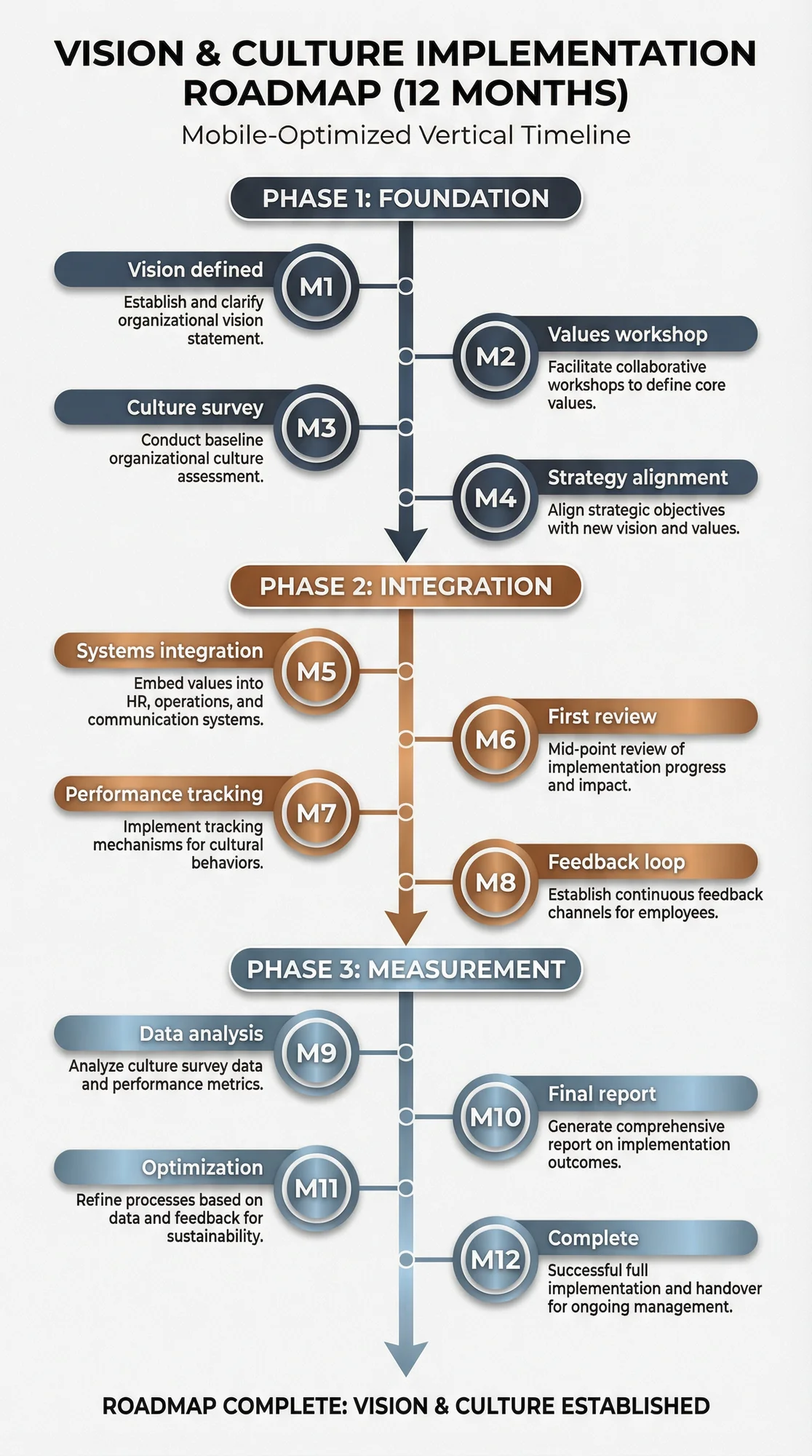
Figure 4: 12-Month Implementation Roadmap: Foundation, Integration, and Measurement phases.
Phase 1: Foundation (Months 1 to 4)
Month 1: Vision Defined
- Leadership team workshop to define or refine Vision
- Test Vision against the hard questions
- Create a one-page Vision document
Month 2: Values Workshop
- Identify core values (3 to 5 maximum)
- Define behavioural algorithms for each value
- Test values against real scenarios from company history
Month 3: Culture Survey
- Conduct baseline culture assessment
- Identify gaps between current state and desired state
- Share results transparently with entire organisation
Month 4: Strategy Alignment
- Ensure all strategic initiatives align with Vision
- Eliminate or deprioritise initiatives that don’t serve the Vision
- Communicate the “why” behind strategic decisions
Phase 2: Integration (Months 5 to 8)
Month 5: Systems Integration
- Embed values into hiring process (interview questions, evaluation criteria)
- Update performance review framework to include values assessment
- Revise onboarding programme to emphasise Vision, Mission, Values
Month 6: Leader Training
- Train all managers on how to coach to values
- Provide frameworks for having difficult conversations about values violations
- Create accountability mechanisms for leaders
Month 7: First Review
- Conduct first pulse survey on values alignment
- Identify early wins and challenges
- Adjust implementation plan based on feedback
Month 8: Communication Campaign
- Launch internal campaign to reinforce Vision, Mission, Values
- Share stories of employees living the values
- Create visual reminders (digital dashboards, team rituals)
Phase 3: Measurement (Months 9 to 12)
Month 9: Performance Tracking
- Begin tracking behavioural metrics tied to values
- Integrate values into quarterly business reviews
- Celebrate teams and individuals who exemplify the culture
Month 10: Feedback Loop
- Conduct stay interviews with high performers
- Analyse exit interview data for cultural insights
- Make adjustments to systems and processes based on feedback
Month 11: Data Analysis
- Comprehensive review of all cultural metrics
- Identify patterns and trends
- Prepare recommendations for Year 2
Month 12: Final Report & Optimisation
- Present Year 1 results to leadership and entire organisation
- Celebrate progress and acknowledge gaps
- Set goals for Year 2 and commit to continuous improvement
Common Pitfalls (And How to Avoid Them)
I’ve seen companies make the same mistakes over and over. Here are the most common pitfalls and how to avoid them:
Pitfall 1: Too Many Values. Problem: Companies list 10 to 15 values, which makes them impossible to remember or apply. Solution: Limit yourself to 3 to 5 core values. If everything is important, nothing is important.
Pitfall 2: Values That Sound Good But Mean Nothing. Problem: Values like “Excellence” or “Innovation” that everyone claims but no one can define. Solution: Use the algorithmic approach. Define specific behaviours for each value.
Pitfall 3: Leadership Doesn’t Model the Values. Problem: The CEO talks about “work-life balance” but works 80-hour weeks and expects the same from others. Solution: Leaders must be the first to live the values, even when it’s inconvenient. If you can’t model it, don’t claim it as a value.
Pitfall 4: No Consequences for Values Violations. Problem: High performers who violate values are tolerated because they deliver results. Solution: Make it clear that values are non-negotiable. Fire people who consistently violate values, even if they’re top performers.
Pitfall 5: Values Are Created in a Vacuum. Problem: Leadership team defines values without input from the broader organisation. Solution: Involve employees at all levels in defining and refining values.
Pitfall 6: One-and-Done Approach. Problem: Company does a big values rollout and then never talks about it again. Solution: Make values a living part of your organisation. Talk about them in every meeting, integrate them into every process, and revisit them annually.
Pitfall 7: Confusing Perks with Culture. Problem: Companies think ping-pong tables, free snacks, and casual Fridays are “culture.” Solution: Perks are nice, but they’re not culture. Culture is about how decisions are made, how people are treated, and whether the organisation lives its values.
Pitfall 8: Ignoring Remote/Distributed Teams. Problem: Values are defined based on in-office experience, leaving remote workers feeling disconnected. Solution: Explicitly define how values apply in remote/hybrid contexts. Create rituals and communication norms that work across geographies.
Part 6: Measurement: What Good Looks Like
You can’t improve what you don’t measure. But measuring culture is notoriously difficult. It’s not like measuring revenue or customer acquisition cost. Culture is qualitative, subjective, and constantly evolving.
That said, there are ways to measure culture that are both rigorous and actionable. Here’s my framework:
Leading Indicators (Predictive)
These are early warning signs that tell you whether your culture is healthy or deteriorating:
- Psychological Safety Score: Measured through pulse surveys. Target: more than 75% of employees agree that they feel safe to take risks and admit mistakes.
- Values Alignment Score: Measured through quarterly surveys. Target: more than 80% of employees can articulate the company values and see them reflected in daily decisions.
- Purpose Clarity Score: Measured through pulse surveys. Target: more than 85% of employees understand how their work contributes to the Vision.
Lagging Indicators (Outcomes)
These are the results of a strong or weak culture:
- Employee Retention Rate: Target: more than 85% annual retention for high performers.
- Internal Promotion Rate: Target: more than 30% of leadership positions filled from within.
- Employee Referral Rate: Target: more than 40% of new hires come from employee referrals.
- Customer Satisfaction (NPS): Target: more than 50 NPS (this is a lagging indicator of culture because happy employees create happy customers).
Behavioural Indicators (Observable)
- Time to Escalate Issues: How quickly do problems get surfaced? Target: under 24 hours for critical issues.
- Cross-Team Collaboration: How often do teams work together on projects? Target: every team collaborates with at least 2 other teams per quarter.
- Feedback Participation: What percentage of employees participate in feedback sessions (giving and receiving)? Target: more than 70%.
The Quarterly Culture Review
At Alchemative, we conducted a quarterly culture review where we looked at all these metrics together and asked:
- What’s working? Where are we seeing positive trends?
- What’s not working? Where are we falling short?
- What’s changed? Have there been any significant events (new hires, departures, market shifts) that might be impacting culture?
- What do we need to do differently? Based on the data, what specific actions will we take in the next quarter?
This wasn’t a box-checking exercise. It was a serious strategic conversation, usually 2 to 3 hours, with the full leadership team. And we shared the results (both good and bad) with the entire company.
Transparency about culture metrics builds trust and accountability.
Conclusion: The Long Game
Building a company with a strong Vision, Mission, Values, and Culture is not a sprint. It’s a marathon. It’s a commitment that will test you, frustrate you, and at times make you question whether it’s worth it.
It is worth it.
In my years building Alchemative, the moments I’m most proud of aren’t the big deals we closed or the revenue milestones we hit. They’re the moments when I saw our values in action: when a team member admitted a mistake and the team rallied to fix it, when we turned down a lucrative project because it didn’t align with our principles, when a new hire told me they joined because they could feel the culture in the interview process.
These moments don’t show up on a balance sheet, but they’re the foundation of everything else.
If you take one thing away from this guide, let it be this: Your values are either your bedrock or your hypocrisy. There is no middle ground. You can’t fake culture. You can’t buy it with perks or mandate it with policies. You can only build it, day by day, decision by decision, by living your values even when it’s hard.
So take your values off the wall. Turn them into algorithms. Embed them into every process, every conversation, every decision. And watch as your culture becomes your ultimate competitive advantage.
The world doesn’t need more companies with beautiful vision statements. It needs more companies that actually live their values.
Be one of them.
References
- Sinek, Simon. Start with Why: How Great Leaders Inspire Everyone to Take Action. Portfolio, 2009.
- Collins, James C., and Jerry I. Porras. Built to Last: Successful Habits of Visionary Companies. HarperBusiness, 1994.
- Nadella, Satya. Hit Refresh: The Quest to Rediscover Microsoft’s Soul and Imagine a Better Future for Everyone. Harper Business, 2017.
- Edmondson, Amy C. The Fearless Organization: Creating Psychological Safety in the Workplace for Learning, Innovation, and Growth. Wiley, 2018.
- Groysberg, Boris, et al. “The Leader’s Guide to Corporate Culture.” Harvard Business Review, January to February 2018.
This guide is based on my personal experiences building and scaling technology businesses over 26 years, from Telenor Pakistan to founding Alchemative. It’s opinionated, practical, and designed for leaders who are ready to do the hard work of building a culture that matters.